Meme coin trading, five hard lessons before you buy your first token
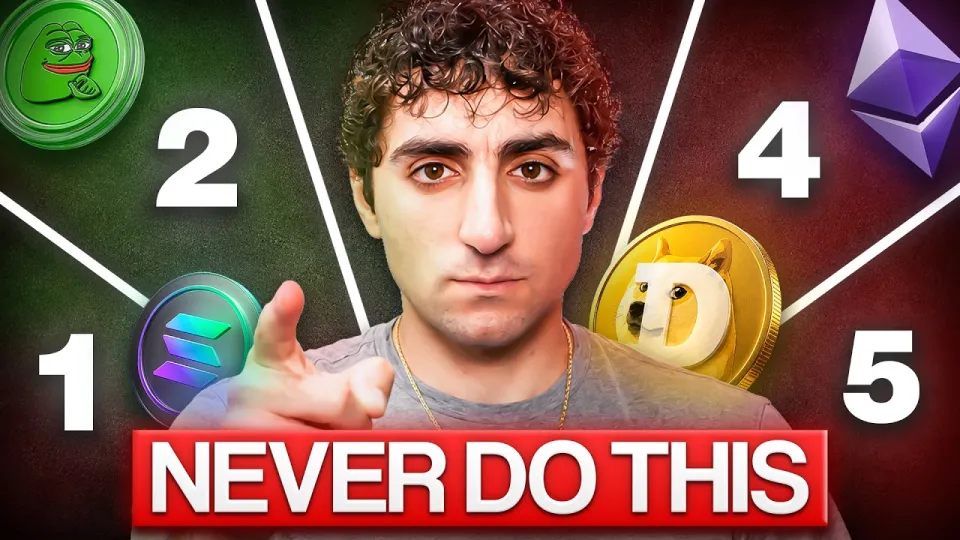
Video: 5 Things I Wish I Knew Before Trading Memecoins (Learn From My Mistakes)
Need articles like this for your video? They help promote it on YouTube and Google — order them in the Telegram bot @sat_sit_bot. It writes articles around your video, embeds the video and publishes them on popular niche websites (no ads). Try it free: 50 articles on us.
Key takeaways
- Memecoins are pure sentiment plays: no cash flow, no earnings, only the next buyer's willingness to pay more.
- Most losses come from boredom trading and oversized positions, not from picking the "wrong" coin.
- Check liquidity and holder concentration before entry — a thin pool can trap you regardless of market cap.
- Decide your exit (partial profit, stop, invalidation level) before you click buy, not after the candle turns red.
- Treat every memecoin position as money you can lose entirely; size accordingly, not by conviction.
Meme coin is a cryptocurrency with no product, cash flow or roadmap behind it — its price is driven purely by community attention and the flow of new buyers. That makes trading memecoins a sentiment and liquidity game rather than an investing discipline, and the mistakes that cost money are behavioural, not analytical. The breakdown below follows the lessons in rasmr's video «5 Things I Wish I Knew Before Trading Memecoins (Learn From My Mistakes)», and if you want to trade alongside the channel's setup, you can register on fomo via rasmr's referral link.
What a meme coin actually is and why the rules differ
A meme coin has no intrinsic valuation anchor, so classic fundamentals — revenue, TVL, tokenomics sinks — tell you almost nothing about where price goes next. What matters is the order book: how much liquidity sits in the pool, who holds the supply, and whether new money is arriving faster than existing holders are leaving. This is why the same chart pattern that works on a large-cap asset can fail completely on a memecoin: on a $2M market cap token, a single whale selling $50k can wipe out a week of gains. Treat every memecoin as a short-horizon trade with a defined risk budget, not as a long-term holding you gradually fall in love with.
Lesson 1: boredom is the most expensive position you can take
The single most common account-killer in memecoin trading is entering a trade because nothing else is happening. One viewer's comment captures it precisely: the whole thing is a patience game, and the hardest losses came from trading a full portfolio during a bear market out of sheer boredom. Actionable version:
- Write down why you are entering — narrative, catalyst, or setup — in one sentence before you buy.
- If the sentence contains "I'm bored" or "it's pumping, I don't want to miss it", skip the trade.
- Keep a cash buffer so that not trading is a comfortable option rather than a forced sacrifice.
- Review your last ten trades: the ones taken without a thesis are usually the red ones.
Lesson 2: position size decides whether you survive the learning curve
Most beginners lose not because their analysis is wrong but because the position is too big for their psychology. A size that makes you check the chart every five minutes will produce panic sells at the worst moment and FOMO re-entries at the top. A practical rule is to cap any single memecoin at a small fixed percentage of the portfolio — a level where a total loss is annoying but does not change your month. If you cannot name the amount you are willing to lose entirely on a token, you are not ready to size the trade.
Lesson 3: liquidity and holder concentration before the chart
Before looking at a candle, look at the pool. Two numbers matter more than market cap: how deep the liquidity is, and how much of the supply the top wallets control. A token with $30k of liquidity and a top-10 holder base owning most of the float is a trap regardless of how good the chart looks — you can be exit liquidity for someone who bought earlier and cheaper. Check the contract for mint authority, check whether liquidity is locked, and check whether the top wallets are the deployer's own addresses. If the pool is thin enough that your exit would move the price several percent, your position is too large for that token.
Lesson 4: define the exit before the entry
Every memecoin trade needs three numbers written down in advance: the invalidation level where the thesis is dead, the first level where you take partial profit, and the maximum you are willing to give back. Memecoins move fast in both directions, and deciding mid-candle almost always produces the wrong choice — holding a loser hoping for a bounce, or selling a winner at the first green candle and then watching it multiply. Scaling out in tranches removes the pressure of picking one perfect top, while a hard stop protects you from the scenario where the token simply never comes back.
Lesson 5: consolidation, confirmation and the question beginners always ask
A frequent question from newer traders is whether to buy during consolidation or wait for confirmation such as news. The honest answer is that both are valid but they carry different risk profiles: buying inside a tight range gives a better entry price but a higher chance of being stopped out by a fake breakdown, while waiting for a volume expansion or a clear catalyst confirmation costs you part of the move in exchange for a higher hit rate. What matters is consistency — pick one approach, define the trigger in advance, and stop switching methods after every loss. Chasing a green candle with no plan is neither of the two; it is just the FOMO entry that the video's lessons are built around avoiding.
Common doubts from newer traders
New traders repeatedly ask the same things: how much of a portfolio should go into memecoins, whether it is too late to start after a month of mistakes, and whether the market is simply a patience game. The practical answers are unglamorous — a small fixed allocation, a written trade journal, and a rule that no entry happens without a stated thesis and a stated exit. Losing money in the first month is normal; repeating the same mistake for the third month is a choice. Educational content helps most when it is applied to a process you actually follow, not just watched once.
Bottom line
The five lessons converge on one idea: memecoin trading is a risk-management discipline dressed up as a lottery. Boredom trades, oversized positions, thin liquidity, undefined exits and method-hopping after losses account for most of the damage beginners do to their own accounts. The channel rasmr builds its advice around exactly these failure modes, which is why the framing is mistake-driven rather than hype-driven. If you want to put the rules into practice, you can sign up on fomo through rasmr's referral link and start with a position size you can genuinely afford to lose.
Source: 5 Things I Wish I Knew Before Trading Memecoins (Learn From My Mistakes) · Markdown version
Questions & answers
How much of my portfolio should I put into a single meme coin?
Only an amount you are prepared to lose in full, because memecoins can go to near zero without warning. A common approach is a small fixed percentage per position, so that a total loss on one token does not damage the whole portfolio. If the position keeps you checking charts every few minutes, it is too large for your psychology.
Should I buy during consolidation or wait for confirmation?
Both approaches work if you apply them consistently. Buying in a tight range gives a better entry but a higher chance of a fake breakdown, while waiting for volume expansion or a clear catalyst costs part of the move but raises the hit rate. The mistake is switching methods after every loss or chasing a green candle with no plan.
Why do memecoins behave so differently from Bitcoin or large caps?
They have no cash flow or valuation anchor, so price depends almost entirely on attention and new buyers arriving. On a small market cap, a single large holder selling can move the price several percent, meaning chart patterns that work on liquid assets often fail. Liquidity depth and holder concentration matter more than the chart.
Is meme coin trading just a patience game?
Largely, yes — the biggest losses usually come from trading out of boredom rather than from bad coin selection. Waiting for a setup that matches your written thesis, and skipping trades when nothing qualifies, is a skill that separates surviving traders from those who burn their portfolio in a quiet market.